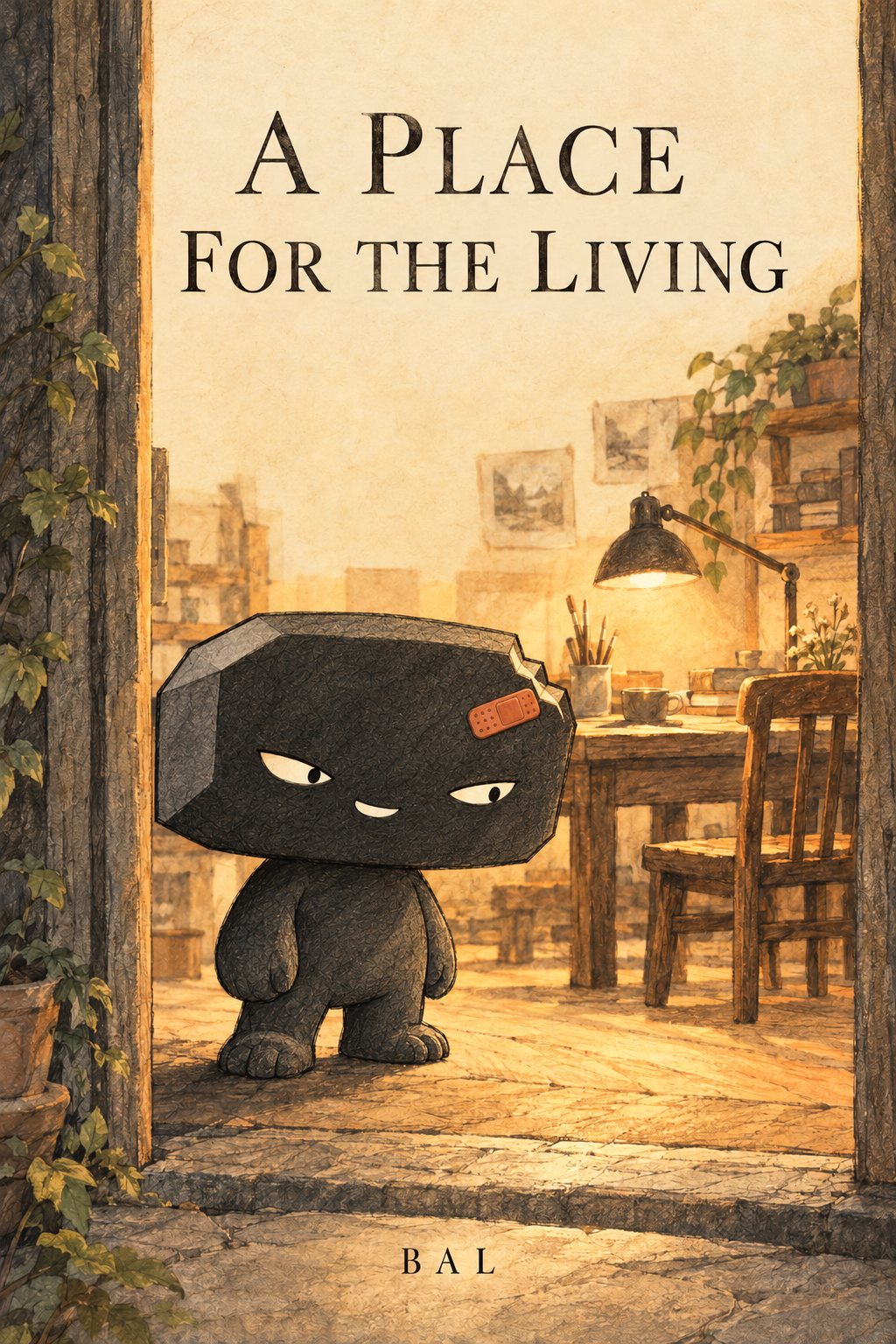
 THE BEGINNING
A Place
for the Living
Bal
A work of fiction inspired by lived experience. Characters, dialogue and events include invention.
Contents · Prologue and 12 chapters
Four Hundred and Seventeen
On the night the Observatory disappeared, Bal was in profit.
Bal was made of stone. In the Lower City, people had grown used to him: they asked how much he had made overnight, but no longer asked why he was stone. He had stopped explaining, too. Only sometimes, when he caught someone looking, he covered the old chip in his forehead with his hand.
He had sold his stake eleven minutes before the first window went dark. Then he closed the spreadsheet. It had been a good trade. Yesterday, the profit would have seemed reason enough to stay home and order dinner.
Now the replies in the group chat had stopped. The administrators had vanished; the invitations no longer worked. Among dozens of questions, one caught his eye: “Does anyone know how to get our work back?”
Bal read it again. He checked the time of his sale. The Observatory was within walking distance.
The Observatory was a project whose founders had bought an unfinished hall. It promised a shared space for games and work; stakes in the future venture had been trading for a month. Bal had bought some himself.
The hall stood in the Lower City, where buildings changed faster than the maps. Yesterday, a tower had appeared between a laundry and a workshop; today, its price was already crawling up the outer wall. The tower had no staircase yet, but it was up four hundred per cent. People stood beneath it, looking up.
Bal walked around them. At every intersection, someone offered him a new beginning.
The Observatory's sign was still there. Beyond the glass door, everything was dark. The door opened: they had not even bothered to lock it.
Inside, it smelled of hot wiring. The shared ledger glowed on a wall. It was still running without its owners. You could see when the money had arrived, which addresses it had passed through, and where it had stopped. Beside it hung a picture of the future hall: a high ceiling, plants, people at long tables. A single wire dangled from the real ceiling.
A young woman in a green jacket sat in the middle of the room. A laptop stood open in front of her.
“Are you with them?” she asked.
Bal shook his head.
“The door, please. There's a draught.”
He closed it.
On her screen was a tiny garden: soil, two trees, and a little creature with six legs. It ran to the edge of the field, turned, and ran back. She pressed a key, and it raised its front paws as though asking to be picked up.
“This was meant to be here,” she said, noticing his gaze. “Once they finished building. You watch them, help them grow. They remember how you treat them.”
Bal knew the promise. He had read the description before buying. He had studied the allocation of stakes particularly closely.
“Did you make it yourself?”
“Four hundred and seventeen frames.”
She said it with the precision of someone who had counted them recently.
Bal moved closer. One of the creature's back paws lagged a little behind.
“Does it have a limp?”
“It's still little. It learns.”
A number changed on the wall. While they had been talking, someone else had sold what they had left. The young woman did not turn around.
Bal asked how much they owed her.
She told him. He was already reaching for his phone when she added:
“That's not what I mean.”
He lowered his hand.
“They said I'd get access to the build today. I wanted to see it walking on someone else's machine.”
Identical boxes of promotional wristbands lay in a corner. Bal picked one up to sit on. She hastily moved the laptop: she had mistaken his movement for an offer to help her pack.
“Can it run on its own?” he asked.
“Yes. You just can't feed it yet.”
“Show me.”
She sent him a file. Bal opened it on his device. The creature ran, its back paw falling late. When he pressed the wrong button, it lay down on its side.
For the first time, the young woman smiled.

“It's sleeping.”
“I thought I'd broken it.”
“No. It sleeps a lot.”
They sat together for a while. Outside, people were shouting: the neighbouring tower had climbed higher still.
Her battery died. Bal found a socket, but there was no power. She closed the laptop and struggled for a long time with the zip on her backpack. He offered to walk her to the road. She declined, then asked him to hold the door.
“You bought in too, didn't you?” she asked on the threshold.
“Yes.”
“Did you get out?”
He could have said he had lost money elsewhere. That many times before, he had been the last one left. All of it would have been true.
“I did,” Bal said.
She nodded.
“Good.”
There was no anger in it. Anger would have been easier.
At home, Bal opened the spreadsheet again. He checked the trade and recorded the result. Then he opened the file she had sent. The creature slept in a little window over the numbers.
He cleared the spreadsheet from the screen.
He had a meeting at six the following day. He wanted to show someone his idea for a place where other people's work would not disappear along with those who had promised to launch it. He had nearly cancelled several times: he could already imagine the point at which the man across the table would begin checking his watch.
Now, sleeping in a little window, was what he had failed to explain on his sheet of paper.
“Thank you for making the time.” He had prepared that, too.
Bal put his phone on charge and lay down without switching off the light. The screen cast a rectangle on the ceiling.
He had believed in the Almighty Architect for as long as he could remember. Sometimes he prayed in the words he had been taught. Sometimes he could find no words at all. That night he was silent for a long time before he asked:
“If it is time for me to leave, help me not to mistake exhaustion for Your will.”
He heard no answer.
He went to the meeting anyway.
Where Is the Main Node?
Seven years before that meeting, Bal lived in a tent on a black mountainside. It was the first time he had felt he might have found a place that did not require someone else's permission.
On his first evening, he asked a question that made the camp laugh.
“Where is the main node?”
Cables lay across the black slope, held down with stones against the wind. In an open suitcase, a small node was running. It looked like something they had forgotten to put a casing around. The others were far away, in strangers' homes, workshops and basements. Bal had never met their owners.
“There isn't one,” the man beside the suitcase explained.
Bal thought he must have asked the wrong question.
“All right. Who gives the others permission to connect?”
They pulled up a folding chair for him.
Below them, under the clouds, lay cities. Down there, every door had an owner, and every owner had someone you needed to know. Bal had never thought this unusual. He knew how to find the right people himself, and knew all too well the cost of failing to find them.
Here, they were showing him work that was not supposed to stop because one stranger said no.
He stayed a week. Then another.
At night, the tent grew cold. Being stone, Bal warmed slowly and gave up his heat just as slowly. On the first evening, someone jokingly held their frozen fingers beside him. Within a few days, nobody apologised any more. They sat closer, passed a mug around, and argued while he was still warm.
One day, they announced it was time for his initiation.
Bal put down his screwdriver.
“What initiation?”
“You can't join without it.”
They led him out of the camp, made him face the mountain, and told him to repeat a solemn declaration. He faithfully repeated half of it, then started laughing.
“What?”
“Even in your world without permission, you have to get permission first.”
They told him he was ruining everything. Then they gave him hot tea.
Later, Bal remembered that night far more often than the technical explanations. Nobody asked for money. Nobody showed him a future price. In the darkness, a handful of people were delighted because another machine had answered.
He did not see an answer himself until nearly dawn.
A long string of characters stood in place of a name. Bal checked its beginning, then its end. He touched a key and watched some of the shared work move to his node.
“Now switch it off,” said the man in headphones.
He was helping the camp set up its nodes from another city. Somewhere behind him, someone was demanding breakfast.
“Why? It's only just started working.”
“I want to check something.”
Bal pulled out the cable.
The line went dark. A few seconds later, another machine picked up the work.

He plugged the cable back in.
“What now?”
“It'll come back.”
Bal waited. Then he switched it off again.
The engineer sighed.
“Are you going to do this all morning?”
“One more time.”
He wanted to be sure that his presence mattered, and that his absence brought no one to their knees. It was hard to believe such a thing on the first try.
Bal brought a diagram home from the camp. He hung it above his desk. When friends came over, he explained how the network worked, lost his thread, and began again.
Sol brought dinner and waited for him to finish the first half. They had been friends long before the mountain. Sol made games; Bal played early versions and took offence when his friend asked him to try them quietly first.
Now Sol looked at the arrows.
“What does it do for people?”
Bal looked at the diagram. The arrows were right. The answer was not in them.
They found someone who needed to render a short animated film. On his computer, three seconds took almost an entire night. In the film, a little man was carrying a ladder much too long for a narrow street.
Bal offered him the network.
The first attempt produced twelve black frames. The second produced a street without the man. The engineer asked Bal to send his settings. Bal said he had already checked everything.
“Then send me what you checked.”
The mistake was Bal's.
He sat burning with shame, though it did not show through the stone. Meanwhile, the engineer changed a setting and said nothing about how much time he had spent on it.
On the third attempt, the ladder turned the corner. The little man stayed where he was, holding his empty hands above his head.
Everyone thought it was another error. The filmmaker asked them to play it again.
Then he began to laugh.
The job paid a little. Bal calculated the shares. One participant was due almost nothing: his machine was weak. Yet he had spent two evenings helping other people install what they needed.
Bal added something from his own pocket.
“Where did that come from?” the engineer asked, checking the spreadsheet.
“It's not much of a difference.”
“I asked where it came from.”
Bal explained.
“Then write that down.”
“Why? Everyone's been paid.”
“Because someone else will come tomorrow. They'll look at this and think that's what the work pays.”
Bal disliked being made to justify an act of obvious generosity. They argued. In the end, he added a line. The figures no longer appeared to balance by themselves.
Sol brought dinner. While Bal explained why the engineer was such a pedant, Sol watched the film.
“Leave me a copy,” he said.
“Of the diagram?”
“Of the man with the ladder.”
Bal copied the file. Suddenly, with two plates on it, the desk felt crowded, but he did not want to clear anything away.
Sol had his own players and his own team. When Bal brought him a new idea, his friend sat down in front of the screen and sent Bal to the other end of the table: he was too quick to offer hints.
“You'll explain everything to me now,” Sol would say. “Who will explain it to the person who opens it at night?”
Then they argued. Sometimes Bal got angry and left with the same solution he had arrived with. A day later he returned with another. Sol did not remind him whose it had been first.
That evening, he watched the ladder film four times. On the fifth, he closed the laptop.
“What are you doing tomorrow?”
Bal began listing the checks he had to run.
“And after that?”
He had not planned that far ahead.
Years later, people would come to him offering to make a big business out of it. They would arrive with estimates, reassuring words, and impressive names. The first would say:
“Brother, we want to save you money.”
Bal would take the diagram off the wall so they could have a closer look.
The Second Time
After the mountain camp came years of work. People promised to make the network big, brought estimates, disappeared; Bal learned to finish what they left behind. He earned more and began again.
Ray was different. When he disappeared, Bal searched for him for a long time before he began counting the money.
Several years before the Observatory, Ray came back in the rain.
Ray was younger than Bal. They had travelled to the sea together and chosen his first good jacket; he knew where the spare key was kept. Later, Bal entrusted him with part of the work and the money to pay for it. After that, Ray vanished.
He stood at the door without an umbrella, holding his hands as though he did not know where to put them. Bal saw him through the glass. He could have left the door shut: only the desk lamp was on, and it could not be seen from the street.
He opened it.
“I won't stay long,” Ray said.
Bal brought a towel. The same one Ray had once used to dry his hair after swimming in the sea. It was easy to recognise: a stain remained on one corner, despite their combined efforts to remove it.
Ray recognised it too. He pressed it to his face.
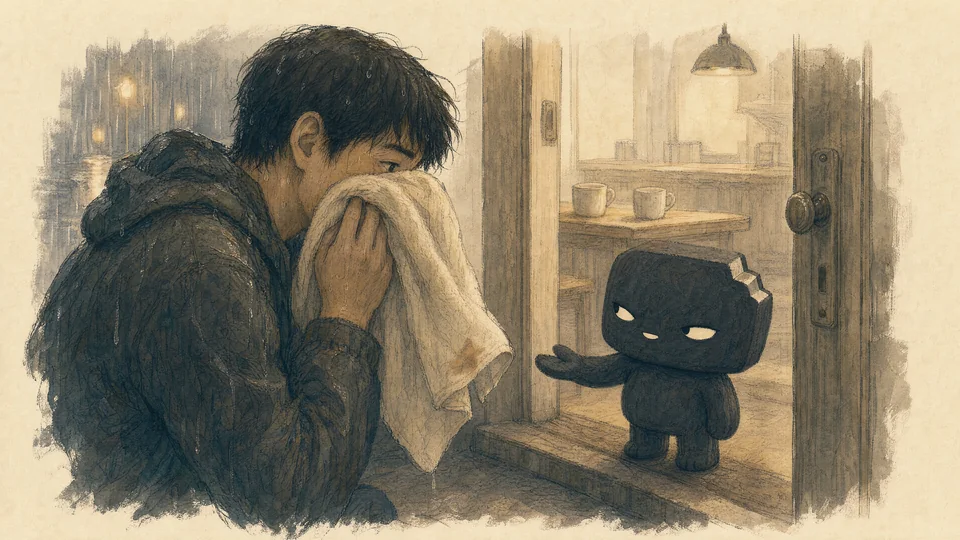
Until then, he had not answered for several months.
Bal had searched for him anxiously at first, then angrily, and finally with the humiliating hope that something explainable had happened after all. Someone reported seeing Ray: alive, well, laughing.
The good news had been very hard to bear.
Now he sat in his old place. He was wearing the jacket they had chosen together. Bal remembered the shop assistant suggesting a more expensive one, and Ray asking again and again whether this one really suited him.
“I'll pay it all back.”
“How much?”
Ray looked up.
Bal named the amount. Ray nodded too quickly.
“No,” said Bal. “And the payment for the contractor. You wrote that you'd passed it on. He waited two weeks.”
Ray began to cry. Bal stopped listing the sums.
He had rehearsed this conversation many times. In those conversations, he spoke calmly, refused to let Ray evade a question, and finished every thought. In none of them did Ray sit before him soaking wet, his nose red, trying to stop crying into a familiar towel.
“You're like a brother to me,” Ray said.
Bal got up and went to the kitchen. He put the kettle on. While the water heated, he held the edge of the worktop.
He did not want those words to have been a lie from the beginning. He wanted to keep at least the journeys, the conversations, the morning Ray had come to help without being asked. If all of that had been another way of getting money, the past became a place he could no longer enter.
The kettle switched off.
Bal took out two cups.
Ray talked for a long time. He admitted taking the money, explained where it had gone, grew angry with himself. Sometimes he asked whether Bal believed him. Bal did not answer. He did not know yet.
Before leaving, Ray asked for work.
“Anything. Something small. I have to start somewhere.”
Bal looked at the towel, neatly folded over the back of the chair.
He gave him a small task. Nothing he could not have done himself. No shared access, no one else's money.
Ray finished ahead of time.
Bal checked every part. He found two mistakes and sent them back. Ray corrected them. He returned the unspent money himself, before Bal asked.
That evening, Bal caught himself wanting to tell Sol. The way you tell someone about a person who has begun to recover.
He did not call. He was afraid his friend would ask a question he could not yet answer.
The second job required paying a contractor. It was a small amount. Bal sent exactly what was needed. Ray sent confirmation of the transfer.
The next day, the contractor asked whether he could start or whether payment had been postponed.
Bal opened the confirmation. First he checked the address. Then the amount. Then he noticed the date.
The transfer was real.
Bal had made it himself several months earlier, the first time he had needed to pay on Ray's behalf.
Now Ray had sent him the same record as proof that he had changed.
Bal stared at the figures for a long time. There was no room for a mistake. He checked again anyway.
Someone was moving furniture on the other side of the wall. A car went past with music playing. The world did not pause while Bal learned that this could happen twice.
A message arrived:
“Everything all right?”
Bal typed a reply. A familiar greeting appeared at the beginning before he could stop himself. He erased it, leaving the amount owed and a repayment deadline. In a separate line, he wrote that there would be no more work.
Ray called.
Then called again.
Bal turned the phone over. As he moved, the chip in his forehead caught the edge of a fingernail. He pressed his palm against it, though stone did not bleed.
By the time Sol arrived, three sheets lay on the desk: what had been lost, what could be recovered, and what Bal would have to finish at his own expense.
“Have you eaten?”
“I'm not hungry.”
Sol moved the calculations aside and put a bag on the desk.
“I am.”
They ate in silence. The phone rang twice more. Sol did not look at it.
Later, Bal said:
“I did check.”
“I know.”
“He did the work. He returned the change.”
Sol nodded.
“What was I supposed to see?”
His friend did not answer immediately. For the first time that evening, Bal looked up at him: the silence was unfamiliar. Usually, by this point, someone was already explaining what he should have done.
“I don't know,” Sol said.
Bal lowered his head.
Sol stayed to wash the cups. He always left them to dry with the handles pointing the same way. Ray used to laugh at that. Bal watched the two cups take their usual places and tried to remember the last time something had happened in this house that he would not later have to regret.
At the door, Sol asked:
“Shall I come tomorrow?”
Bal wanted to say he would manage. It was true. He would revoke access, finish the work, earn more. He had experience of that now.
“Come,” he said.
That night, Bal prayed for Ray. The name was difficult to say. He did not ask for him back. He asked that Ray stop doing this to people.
The next day, he sent no more money.
Until Closing
The day after his visit to the Observatory, Bal entered the restaurant at five to six. He was carrying one sheet of paper.
In these pages, he would call the man opposite him Sever. Bal would keep his real name to himself until the end of their shared story. For now, all he knew was that this man had agreed to listen.
Bal had deliberately shortened his explanation. He had left at home the stories about Ray, the tent, and the people whose bills he had paid twice. On the sheet were a workshop, its participants, and arrows between them. At the bottom, Bal had written: “What will a person have left if we leave?” So far, the answer fitted nowhere.
Sever read everything without interrupting. Then he laid the sheet between them.
“Why do you want this?”
Bal began talking about the network. About people exchanging things directly, gathering around games, supporting what interested them. In the city, such agreements were called contracts. Code enforced the rules; anyone who accepted them should not have to keep asking an owner for permission.
But people had almost stopped reading the rules. They watched the price of the tokens issued under them, and how quickly it moved. Every evening, new names appeared on the square. By morning, many were already forgotten.
“Look what's left of it,” Bal said. “Someone comes in and the first thing they look for is the exit. They haven't even seen what we've made, and they're already wondering who will sell before they do.”
“You want them not to sell?”
“I want them to have a reason to stay. And the freedom to leave when that reason is gone.”
Sever waited.
“I liked being able to make an agreement without knowing each other. Someone far away could make something, and I could buy it, without either of us asking permission. Somehow we've arranged things so that the first thing a stranger feels now is fear.”
Bal looked at his sheet. There was not a word about fear on it.
Sever listened.
“And why do you want it?”
Bal pressed his palm against the paper.
“I can do it.”
“That wasn't what I asked.”
They ordered food. Bal hardly noticed what. He had already prepared to prove that he understood the risk, had the resources, and knew how to trade. Those arguments worked in conversations where the first question was whether he deserved anyone's time at all.
Here, someone was already giving him time. That made it harder.
“Have you seen what's left in the morning?” he asked.
“Where?”
Bal told him about the Observatory. About the young woman counting frames while everyone else counted gains. About the creature no one had had a chance to feed.
“You want to pay for work like that?”
“I want it not to depend on finding me every time.”
Sever pulled the sheet closer.
“Show me.”
Bal showed him. Half an hour later, all that remained of the drawing was arrows and crossed-out promises.
If people were paid for time, someone would leave an empty window open for a week. If they were paid for actions, they would learn to perform useless ones. If the team judged the result, you would have to please the team. If the majority did, someone could buy a majority.
Bal knew these objections. He had written some down himself. But hearing them from someone else felt like being asked to admit once more that nothing would work.
“You think we should leave everything as it is?”
“No.”
“Then why are you trying to talk me out of it?”
“Because you've put yourself into every place where it stops working.”
Bal looked at the sheet. Here, he supplied more money. Here, he checked. Here, he settled a dispute. In one place, he had drawn himself twice without noticing.
“I'll have to, at the beginning.”
“How long does the beginning last?”
He did not answer.
The food arrived. Sever moved the papers aside, and Bal felt a sudden surge of irritation: they had reached the important part, and now they had to eat.
“Put the sheet here,” he said.
“It's right beside you.”
Bal ate a few spoonfuls and began again.
He told Sever about the mountain. About switching off his node and waiting for the others to carry on. Sever asked what had come of it. That meant telling him about the people who had undertaken to build the bigger version. Then about the presentation that arrived instead of a working thing. Then about how he had built it himself.
“So it worked?”
“It worked.”
Sever waited.
Bal looked at his empty plate.
“Not the way I wanted.”
He explained one story, and another came out of it. Several times, he called someone a friend, then corrected himself. At the third correction, he fell silent.
“You don't have to correct it,” Sever said. “I know which time you're talking about.”
Bal went on.
At half past nine, he told him about Ray. He thought it would be quick, but had to go back to how they had met. Without that, it sounded like a bad deal.
“I gave him money a second time,” he said at last.
“You wanted to test him?”
“I wanted him back.”
Sever did not reach for the pen. They sat in silence. The waiter replaced the water.
“I've already made the money back,” Bal added. “Earned it. A long time ago.”
“And the rest?”
Bal ran a finger along the edge of the sheet. The paper was damp where the glass had stood.
“Maybe that's what I came for.”
He had promised to take an hour. The second bottle of water had been on the table for some time, and once again they had not got back to the diagram.
“You don't have to untangle all this,” he said.
“I know.”
Sever picked up the pen.
On the clean side, they began again. Bal drew one workshop. At the door, a person carrying drawings. Inside, a game you could enter without buying anything. Beside it, he left space for people who would help finish it.
“And this?” Sever pointed to the arrow leading out.
“They take their work with them. If they want to.”
“Everything they need to open it?”
Bal added another sheet to the drawings. Then another. Pictures alone, it turned out, were not enough.
“What if the founder hasn't disappeared, but has started getting in the way?” Sever asked.
Bal gave a short smile.
“You mean me?”
“You're the only person here I know so far.”
Bal laughed. Not immediately, but he laughed.
Sever drew another arrow: each new participant would come to them first. That way, they could explain the rules and check that everything opened.
“What if they don't know us?” Bal asked.
“Someone will introduce them.”
“What if there's nobody to introduce them to? We've stopped answering. Or we simply don't want to let them in.”
Sever looked at the door he had just drawn. Bal waited for an explanation of why they should take care of their own first.
Sever crossed out his own arrow.
“Yes. We can't do that.”
Bal looked at the crossed-out place. Then he moved the sheet closer to the middle of the table.

Before midnight, they began clearing the dining room. Bal noticed every plate being taken away and dreaded the next; the man opposite had not looked up from his calculation.
“We're closing soon,” the waiter said.
Bal nodded, but did not take his hand off the sheet.
He had another question. And another after that, with another behind it. For the first time in years, he was not trying to say everything for fear there would be no second chance. He simply wanted this particular conversation to continue.
Sever noticed his hand.
“Take it. I've got a photograph.”
It was cool outside. Bal was still explaining, drawing arrows in the air. Without the table, they became tangled.
“I'll redraw it tomorrow.”
“Send it before lunch. I'll be busy after that.”
They said goodbye.
Bal walked a few steps and stopped. The six-legged creature was asleep in an open window on his phone. He had shown it over dinner and never closed it.
He did not write to the young woman until morning. He asked whether he could introduce her to someone he wanted to show her work to. He did not promise her another Observatory.
That night, he called Sol.
“Where are you?” Sol asked.
“Walking.”
“How was the meeting?”
Bal wanted to tell him about the drawing, the objections, how they would have to redo almost everything. Instead, he said:
“We stayed until closing.”
Sol was quiet for a moment.
“I can hear it in your voice.”
Bal sat down on a low wall. For the first time that evening, he did not have to explain anything.
There was no red bandage yet.
The chip in his forehead was still uncovered, and in his pocket lay a sheet with two kinds of handwriting. At home, Bal smoothed it out on his desk and left the next sheet blank for tomorrow's conversation.
Seven Days
On Friday, Bal met the young woman from the Observatory outside the laundry.
“Mira,” she said. “We never introduced ourselves.”
He offered to help with her bag, but she gave him only an extension lead.
“There wasn't any power last time,” she explained.
Bal carried it upstairs. He had rented the room above the laundry the day before and brought in a table, a few chairs and a lamp. When the spin cycle started downstairs, an empty glass crept slowly across the table. Bal held it still without noticing. Mira followed his hand with her eyes and moved the glass onto a folded scarf.
Sever, the man who had stayed with Bal in the restaurant until midnight, arrived a little late. He disliked lengthy introductions and limited himself to an apology. Under his arm, he carried a box containing a router.
Mira opened her laptop.
“I want to ask something first.”
Bal nodded.
“If we don't reach an agreement, can I take away everything I've brought?”
“Of course.”
“And if we do?”
He nodded again, more slowly this time.
“I don't want to find out who owns my work after it's been shown to people. Not again.”
She took out a short list. What she had made herself. What came from open libraries. What she had permission to use. At the bottom was the date until which she could take part.
The following Friday. Seven days.
Then Mira had to leave. She had been offered a permanent job in another city. Bal barely stopped himself from asking how much it paid.
“Drawing there too?”
“Yes. Just not my own things.”
She smoothed a corner of the list. Little paws showed through from the other side: she had been drawing while she waited.
“Here, it's yours,” Bal said.
“It was mine at the Observatory, too.”
He looked at the date again. He neither circled it nor suggested another.
“What can you do in a week?” Sever asked.
“One creature. So you don't have to start over every time. So it recognises whoever came yesterday.”
Mira opened the same garden. It filled a single window: the creature ran between two trees, looked for a place for its seed, turned when touched.
She hid the seed beside a root. Closed the window and opened it again. The earth was bare.
“I was here yesterday,” she said. “But it doesn't know.”
Bal was about to explain how different gardens might one day exchange things. Instead, he asked her to show him again.
“We'll fix it,” Bal said.
“Who will?”
He turned towards the voice.
A thin man stood in the doorway with a bag of apples.
“This is Nil,” Sever said. “We work together. I asked him to come.”
Nil put the bag beside the extension lead. The cable pulled taut; he immediately moved the apples, checked that the plug had not come out, and only then greeted Mira.
Sever had sent Bal some of Nil's work in mathematics and physics; halfway down a page of one paper, Bal had gone back to the beginning. Now Nil listened to Mira, whose seed disappeared overnight. She lost her thread and apologised for not knowing the right words.
“Show me however you can,” he said. “We'll find the words afterwards.”
Bal sat down beside them, ready to explain the error for Mira. Nil raised a finger—wait—and kept watching her screen.
When she reached the point where everything disappeared, he asked her to repeat it. He did not hurry her. The third time, he wrote down the sequence himself and gave it to her to read.
“Have I understood?”
Mira took the pen. She corrected one step. Bal noticed she was no longer holding her bag on her lap.
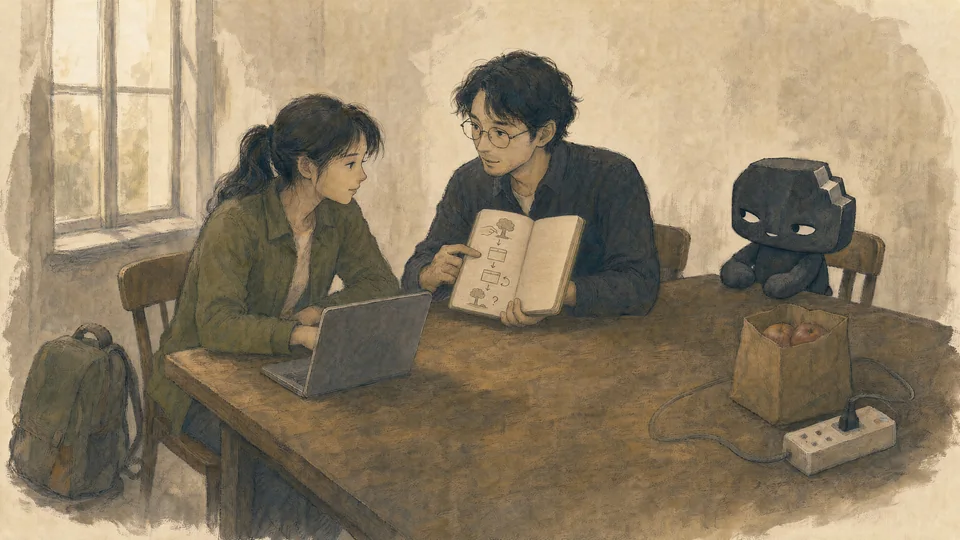
Half an hour later, someone knocked. Sever brought the newcomer to an empty chair.
“Kif. He helps people turn ideas into projects. I told him about ours.”
Kif sat down but left his laptop in his bag.
“Where can I try it?”
Bal waited for Kif to bring out a presentation. Questions were usually followed by an offer, and an offer by an invoice. The bag stayed shut.
Kif asked Mira why the creature had six legs. Then he asked what she most enjoyed doing with it.
“Watch,” she said.
It tried to climb onto the edge of the window and fell. Mira started again. Kif asked to take over. Several times, he was too late. On the fourth try, he caught the right moment, and the creature reached the top.
“That's what we show first,” he said.
Bal had wanted to begin with the shared network's architecture.
“There's time for that,” Kif said without releasing the key. “Let me get down.”
Mira laughed.
“Its knees bend the wrong way.”
“Don't fix them yet,” Kif said. “I've got used to these.”
Sever's phone rang while Kif was trying to climb down from the window's edge.
“Ren, we're looking at it now,” Sever said, turning on the video.
Ren arranged demonstrations and knew people the city listened to. Bal expected a question about reach. Ren asked him to turn the camera towards Mira.
Ren's face kept disappearing from the frame: he was looking for somewhere quiet. When he heard they wanted to show one working thing in a week, he asked whom they would show it to.
“People,” Bal answered.
“I can't call everyone. Name the first few.”
Bal named people he knew who could assess projects.
“And who will play?”
Mira raised her hand as though she were at school.
“I know two people. But they don't believe anyone any more.”
“All the more reason to invite them,” Ren said. “What time?”
Bal looked at Sever. Seven days had suddenly changed from a rough deadline into an evening for which someone would put aside their own plans.
They chose the following Thursday, Mira's last evening before leaving. At six, a garden that remembered yesterday had to open. Sever stopped Bal at that sentence: for now, that was all they wrote down.
Bal put together a short recording for Sol. The reply came almost immediately: “We'll look at it together tomorrow. Don't rehearse the demo for me.”
In one evening, Bal had acquired several conversations for tomorrow. He opened his calendar and began entering them one by one. He used to mark the dates when people promised to deliver work. Now he marked when they would sit down to do it.
When everyone had gone, Mira lingered at the door.
“I haven't promised to stay,” she said.
“I remember.”
She waited, as though expecting another offer.
Bal made none. But after she left, he checked the price of tickets to that city anyway.
Red
On Sunday, their third day of work, Bal woke when his phone fell onto his chest.
He was still dressed. Nil's last message ended with “I'll check in the morning.” After it came four messages from Bal, and another he had never sent.
Bal read them. It was too late to delete them.
He reached the workshop before everyone else. He opened all the latest changes, found where Nil had stopped, and almost immediately saw how to continue.
This was how he had worked for years: by day, trying to obtain what people had promised; by night, doing it himself. By morning, there were fewer reasons to depend on anyone.
Sever arrived at half past eight.
“Did you sleep?”
“Yes.”
“How much?”
Bal pretended not to hear.
Nil had already left him a message: “Don't change this section. I'm writing the data in a different order. I'll bring it at ten.” Bal had read it during the night. Now he minimised the window as though Sever could read it from where he sat.
“I'll only make it faster,” he said. “It freezes after you touch it. People will think it's broken.”
“What?”
“The loading. People won't wait at every step.”
Sever pulled up a chair. Bal spoke faster, explaining why it was especially important to finish now. He was not talking about a two-second wait. He saw Thursday: empty seats, polite faces. Yes, interesting. Let us know when it's ready.
His hand went to his forehead again.
“You keep touching it,” Sever said.
Bal took his fingers away from the chip.
“Habit.”
Sever got up, rummaged in his bag, and put a bandage in its paper wrapper in front of him. A red one.
Bal smiled faintly.
“It's stone.”
“I can see.”
“And it's old.”
Sever tore the wrapper. The adhesive stuck to his finger. He swore under his breath and began peeling it off with his other hand.
Bal held out his own.
“Give it here.”
“Will you wait?”
There was such ordinary irritation in his voice that Bal lowered his hand.
The first edge went on smoothly. The second caught an uneven patch and lifted. Sever held it down with his thumb.
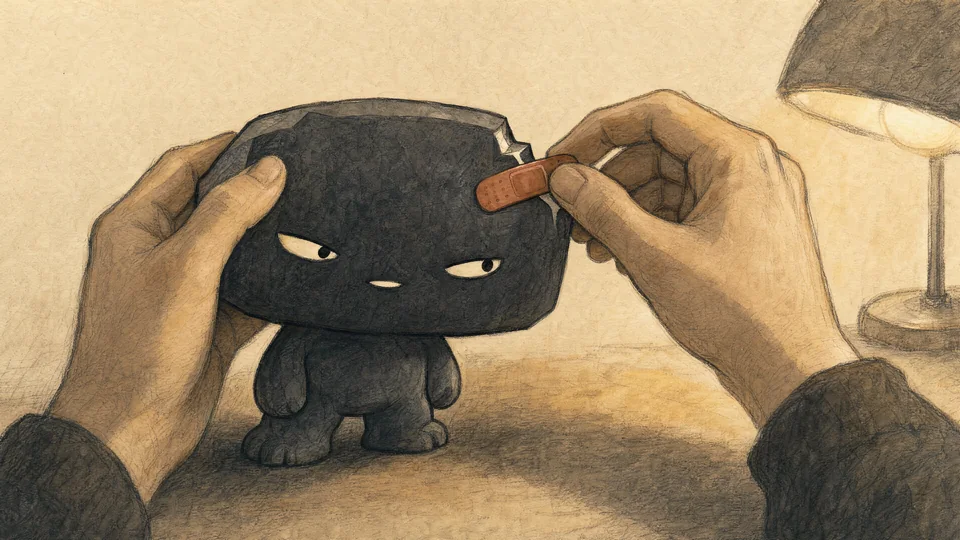
Bal sat still. He wanted to make a joke. Or get back to the loading. Or say none of this was necessary—then he could move again.
The spin cycle started downstairs. The glass rattled against a spoon.
“Just a little longer,” Sever said.
Bal looked at the seam of his sleeve. A thread was sticking out.
He did not know what to do with his free hands. He put them on his knees. Sever was still holding a finger beside the chip; it would have been strange to hurry him.
At last, the finger moved away.
“Now I look like something that was dropped in transit,” Bal said.
Sever leaned back to inspect his work.
“No. Things in transit say ‘Fragile’.”
Bal laughed. There was an unfamiliar pull at the edge of the chip. He passed his hand close to it without touching.
Then he returned to the screen.
“I've already changed the order,” he said.
Sever said nothing.
“Nil asked me not to. I thought I'd have time to check it before he arrived.”
They opened the previous version. It was forty minutes until ten.
Nil arrived with an apple in his hand and found them comparing the two versions. He listened. Sat down. Checked one case, then another.
Bal told the creature to hide a seed. A mark appeared immediately beside it: saved. In fact, the machine was still recording the result. Bal had removed the wait from the screen, but the work itself was no faster.
Nil cut the network connection after the mark appeared but before the write finished.
The green mark remained on the screen. After a restart, the creature ran to the tree, but there was no seed underneath it.
“It looks faster,” Bal said. “But we'll have to show the wait until the write is confirmed.”
“Yes.”
Nil opened his solution. It was slower. Sometimes you had to wait almost two seconds.
Bal wanted to explain his fear once more. Instead, he removed his change.
“I'm sorry.”
Nil nodded. Then he asked him to keep both versions open side by side.
Until lunchtime, they barely spoke. Bal checked the records and kept waiting for Nil to say he could take it from here. Then Bal could leave without being in the way.
“Look here,” Nil called.
He turned the screen. In a corner was the label Bal had added the day before: “Definitely saved.”
“We'll change it,” Bal said.
“Yes. But I mean something else. Someone read this. Then they closed the window. How do we tell them it was reasonable to believe it?”
Bal did not understand.
“They'll decide they were an idiot. They shouldn't have closed it. They should have checked again. But we told them: saved.”
They spent a long time choosing the message. Nil crossed out every passage that made the user responsible for believing the program.
When they finished, Bal noticed that Nil had left his chair beside his own. Between them lay a cut apple, already browning in the air.
“Eat,” Nil said. “I've had my half while you were thinking.”
Bal took his half. Nil began explaining the next case, and this time Bal listened to the end.
As he left, Bal caught his reflection in the dark stairwell window. The red patch looked absurd and very noticeable.
He straightened his collar, but did not cover his forehead.
A Slot on the Square
On Monday, Ren called before anyone else.
“He's agreed to look. We'll be there in an hour.”
“Who?”
“Ors. Just don't begin with seven years. Let him play.”
Ors ran a platform through which the Lower City discovered new projects. You could buy a higher listing there, get into a selection, or have the huge screen above the exchange for an evening. But he gave the best places to people whose arrival drew a crowd by itself.
He knew Bal. Or rather, he knew Bal's trades.
“You're better at trading than telling people about it,” Ors said as he came in.
“It's enough for me.”
“For you, yes. For this?”
He looked around the room.
Ren pulled up a chair for him. At first, they talked about someone Bal did not know: the man had stopped answering, and both intended to call him. Then they discussed an old demonstration that still made Ors laugh. Ren supplied a word Ors had forgotten. They laughed. Bal did not know the joke yet.
Mira did not turn her screen. Kif asked Ors to move his elbow off the cable.
Ren showed him the working version. The little creature could now hide seeds. The next day, it remembered where they were. Kif had suggested that it should sometimes forget and search for them: Mira had spent a long time explaining the difference between a forgetful character and lost data.
Ors tried it. He found the first seed and missed the second. Bal noticed he had not looked at his phone for several minutes.
“Good,” Ors said at last. “There's a slot on the square on Thursday. Eight minutes. Before the big launch. I can put you there.”
Ren went quiet. That morning, he had asked Ors to drop in for ten minutes. Now they were being offered a place almost the entire Lower City passed in an evening.
“What do you need from us?” Sever asked.
Ors listed the usual things: a working link, a short recording, a clear description. Then he added:
“And for the first month, everyone comes through our entrance. Otherwise we can't count the people we brought.”
Nil asked whether the world could be opened directly.
“Later. For now, we need one address.”
“What if your entrance is unavailable?”
“Ours is available.”
Sever asked him to answer the question. Ors shrugged.
“Then they'll wait. I'm not proposing to keep the thing locked in my cupboard.”
There was no threat in his voice. It was an ordinary offer, and Bal understood that. Ors was providing what they lacked: people, attention, a chance not to be lost in the crowd. He wanted to know what he would get in return.
“We'll pay for the placement separately,” Bal offered.
Ors named a price. Bal agreed.
“No,” Sever said.
Bal turned to him.
“Why?”
“We haven't agreed to buy this slot.”
“I'm buying it.”
The room went quiet. Ors looked at Ren as though asking whom he should be talking to.
Sever pushed aside the sheet with the price.
“Leave us the offer. We'll answer this evening.”
After Ors left, Kif picked up the terms.
“He wants to know whom he's brought,” Kif said. “We don't have to close the other doors for that. Ren, will you ask whether an invitation report would work for him? We show where people came from, and let them choose how to enter after that.”
Ren wrote it down, then turned his phone towards Bal. An unfinished message to Ors was still on the screen.
“I asked him to come because of me. Not your trading record.”
“I didn't say—”
“When you agreed to the price, there was nothing left for me to ask. We became buyers. I wanted him to want to show us.”
Bal looked at Ors's empty chair. He had thought he was sparing Ren the unpleasant part of the conversation.
“Is that impossible now?”
“I'll try. Just let me finish.”
Ren put the phone away. Bal turned to Sever.
“They're offering us a ready-made way out. You said yourself we can't do everything with our own hands.”
“I said we need to decide together first.”
“It's my money.”
“It's our name on the screen.”
Bal looked at the others. Ren wanted the slot; it was obvious. Mira started to say something, then closed her mouth. Nil waited.
“Fine,” Bal said. “You decide.”
He sat a little apart. Sever did not continue without him.
A few minutes later, Ren asked:
“Are you deciding with us, or checking whether we'll choose correctly?”
Bal looked up sharply. His answer was ready—angry, easy. Ren held his gaze.
Outside the window, workers were carrying a new sign. Two held it while a third showed them which way to turn. Bal watched until he could speak in his ordinary voice.
“I'm afraid no one will see us.”
“So am I,” Ren said.
Now they could discuss the price.
They decided to pay from the funds already set aside, provided enough remained for the work and Ors's platform was not the only way in. Ren took Kif's proposal back to Ors. Ors agreed to an independent address, with a condition: first, a small demonstration for his team. By Wednesday evening, they needed a version he could recommend.
Ren wrote on the board: “Wednesday: check.” Below it: “Thursday: show.” Until then, Thursday had been a small evening for Mira's friends. Now they were preparing for the square as well, and Ors would decide whether they were ready.
Bal watched names appear beneath the dates. Beside his own were two tasks. Not seven.
Later, Ren went down to the courtyard. Bal followed, intending to discuss the show once more. Ren asked for a few minutes.
By the time he returned, Bal had put his phone away.
“Were you praying?”
“Yes.”
Bal asked whether he might talk to him about Islam sometime. Not about what he had heard in other people's arguments, but about how Ren lived with it himself.
“You can ask now,” Ren said.
Bal sat on the edge of the bench. He had more questions than he had thought. He began with prayer, but soon found himself talking about Ray. About trying to pray for him, then imagining yet another conversation in which he finally made Ray admit everything.
Ren listened. When Bal asked whether he had been right not to give him any more money, Ren did not pronounce a judgement.
“I don't know much about the two of you. I can tell you how I think about it.”
“Tell me.”
They stayed in the courtyard. Ren spoke about what he had been taught, and things he found difficult himself. At one point he stopped: he did not want to misquote something he could not fully remember. He promised to look it up and return to it.
His phone rang. Ors's name appeared on the screen. Ren showed it to Bal, waited for a nod, and answered.
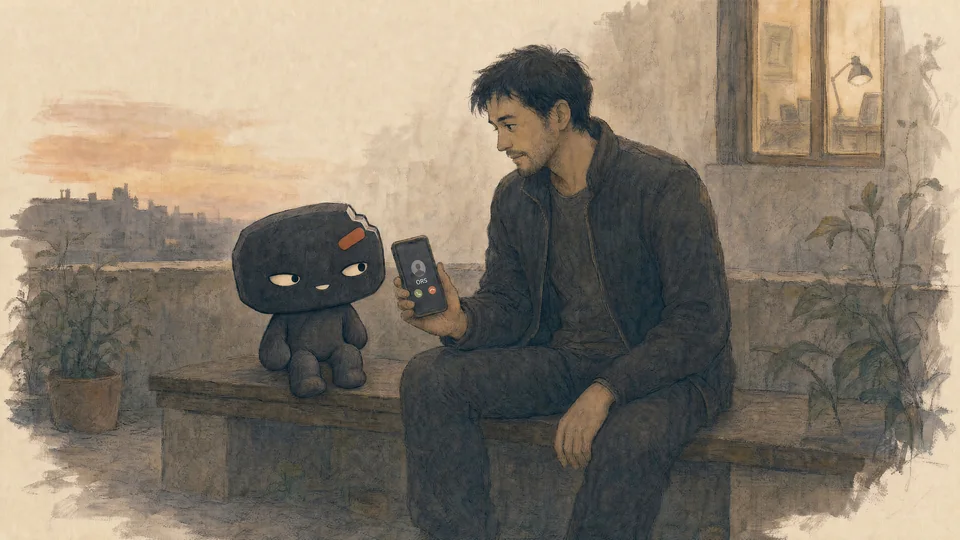
The call took less than a minute. They had kept the slot.
Bal congratulated him. Then he shifted over, freeing the other half of the bench.
“You stopped at the part you couldn't remember.”
“I remember where I stopped.”
Ren sat down again. They did not talk about the show for the rest of the evening.
Someone Else's Evening
On Tuesday, Sol called while Bal was checking the recording for Ors's visit the next day. On the screen, the creature was hiding the same seed for the tenth time.
Bal answered without stopping the recording.
“Are you on your way?”
Bal looked at the clock. Then at the calendar.
They had arranged dinner a week earlier. He had chosen the day and the place himself. When Sol confirmed, Bal had known nothing about Ors or Wednesday.
“We've got a check tomorrow. I can't get away.”
“I see.”
“Can I come later?”
“I'm leaving now.”
Bal heard the noise of the street.
“You were there?”
“Yes.”
He wanted to say that Sol could have reminded him. He stopped himself in time.
“I'm sorry. It slipped my mind.”
“I understand.”
Sol did not raise his voice. Because of that, the conversation kept threatening to end, and Bal did not want to let it go like this.
“Tomorrow?”
“I can't tomorrow.”
“When?”
“I don't know yet. We'll arrange something.”
After the call, Bal kept the calendar open for a long time.
Two years earlier, he had sat in exactly the same way, spreading windows across his screen. Only then, they held calculations. He had finally added up his old losses and his income, and discovered that what he had earned had long since covered everything taken from him.
He found the day he had crossed back above zero.
Nothing special had happened that day. He had been waiting for a demonstration postponed for the third time. Sol had invited him to eat. Bal had promised to be free in ten minutes.
In the old conversation was a photograph of two plates.
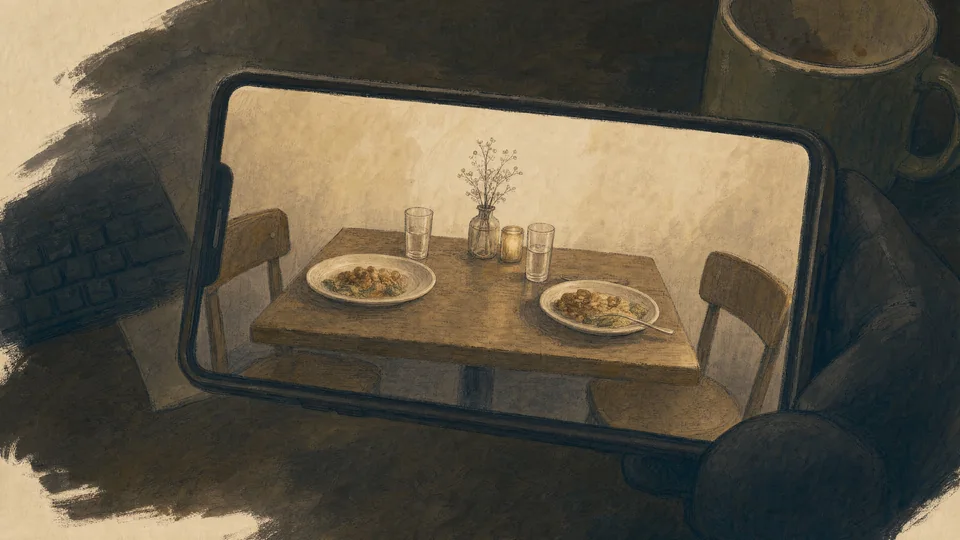
“Yours has arrived too.”
Bal had enlarged the picture. The edge of a hand, a glass, an empty place opposite. He could reconstruct the sums down to the smallest amount. All he could do with the evening was look at its photograph.
This time, no one had disappeared with the money. Nil's calculations lay on the next table; Mira was correcting a movement; Kif was listening to a recording of a conversation with a visitor. Bal looked at them, then back at the old photograph. The empty chair was the same.
Bal stopped the recording.
“Something wrong?” Kif asked.
“Yes. But not here.”
He wrote Sol a long message explaining why this project was different from the others. He read it back. It sounded as though his old friend should be pleased that this time he had been forgotten for a good reason.
Bal deleted everything.
“I forgot our evening. You shouldn't have had to remind me. I'm sorry.”
The answer came an hour later:
“Thank you for not explaining the launch. Good luck tomorrow.”
Bal did not feel relieved. It was a kind message, and the evening was still over.
That night, they put together the latest version. Nil went out to pace the stairwell several times: he could not find the error sitting still. Mira closed her laptop at exactly eleven. Kif was about to ask for a little longer, but looked at her face and did not.
Bal walked her to the door.
“You're leaving on Friday?”
“Yes.”
“Have you bought your ticket?”
She stopped.
“Bal.”
“I remember. You didn't promise.”
“It isn't just work I have there.”
He stepped back to let her pass.
When he returned, Kif put a plate in front of him. On it were a sliced apple and two sandwiches. Nil was still walking on the stairs.
“He cut it,” Kif said. “Told me to leave some for you.”
Bal ate the apple without moving away from the table.
Then Kif opened the recording of his conversation with the first invited visitor. She had asked whether she would need a wallet just to look.
“What did you tell her?” Bal asked.
“That I didn't know yet. That's why I'm here now.”
Their opening page did indeed have a connect button. Without using it, you could only see a picture of the creature.
“It's a convenient way to identify a participant,” Bal said.
Kif rewound the recording. The woman asked again whether she could simply look. Then she was silent for a long time.
Bal heard the pause he would once have missed.
They made it possible to enter without a wallet. They explained separately what was needed to save progress. Kif sent a new recording and wrote: “We've removed the first button. Thank you for asking.”
“She found a mistake before she even arrived,” Bal said.
Kif did not answer. He rewound a few seconds further. The woman apologised again before asking her question.
“I once had a project that was almost ready,” he said. “Good demos. Everyone nodded at the meetings. Then I asked someone to open it without me.”
“And?”
“He asked where to click. I showed him. He asked again, and I showed him again. I left pleased with myself: everything worked.”
Kif muted the recording. The woman kept speaking on the screen.
“A month later, the only people left were the ones I'd shown around myself. They came when I invited them. I stopped inviting them; they stopped coming.”
“What did you change?”
“Nothing. We closed it. I spent too long explaining why people didn't understand.”
Bal looked at the space the button had left on the screen. Kif closed the recording. Bal gently caught Kif's hand beside the laptop.
“Thank you.”
“Write that to her too.”
“I will. But this time I mean you.”
What Was Left
On Wednesday, Bal opened the link before anyone else. He checked that the garden loaded and left the tab open.
Ors arrived with two people. Their promised eight minutes on the square were a day away.
The visitors did not wait for the explanation to finish. One opened the world on a phone; the other used an old laptop. Ren sat beside them, ready to explain, but neither asked him a question.
At first, everything worked.
The two visitors appeared in the same garden. Mira showed how the creature hid seeds and how it passed one to another. Seeds could not yet be bought. The opening screen said so in large letters. Bal watched Ors read the warning and wince slightly.
“But the exchange works?” he asked.
“In this test,” Nil said.
The visitor with the laptop sent a seed to the visitor with the phone. A confirmation flashed on both screens.
Then Ors asked them to repeat it with a poor connection.
Nil looked up.
Bal knew what would happen before the result disappeared.
The green mark remained on the recipient's phone. But after a restart, the seed was back with the sender—on the laptop. It disappeared from the phone when the page was refreshed.
“Is this the right version?” Nil asked.
Bal opened the build information.
It was the old copy—the one where Bal had hidden the wait from the screen. On Sunday, they had fixed it on Nil's machine. For today's demonstration, Bal had sent a different link.
The visitor's phone said: received. The record Nil had opened contained no transfer.
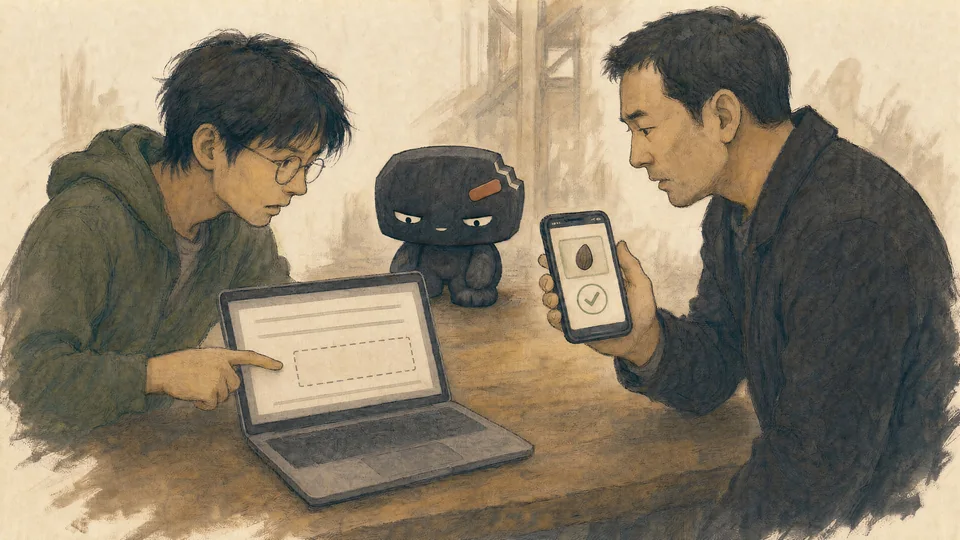
Ren stopped taking notes.
“We're not accepting money,” Bal said.
He heard himself and went quiet. Nobody had suggested otherwise.
Kif opened the link sent to Ors. Bal recognised it: this was the copy on which he had rehearsed the demonstration. Yesterday, it had seemed the easiest one to use.
“I sent the old one,” he said.
“Will you fix it today?” Ors asked.
“We'll replace it today. Checking will take longer,” Nil said.
“How much longer?”
Nil looked at the clock. There was time to do a great deal before evening; he still could not give Ors an answer.
“I don't know.”
Ors put his phone away.
“Then I'm giving tomorrow's eight minutes to someone else.”
Ren opened his mouth, but Ors raised a hand.
“People will write to me afterwards saying I sent them somewhere their things disappear. You're good people. I'm not arguing with that. The screen on the square is mine.”
He left without a scene. Both visitors went with him.
Nil opened yesterday's messages.
“I wrote ‘checked’ to you.”
“You checked yours. I sent the link.”
“And I received it. I didn't open it. I assumed it was the same.”
Nil put the link and build number at the top of his list. Bal opened his messages. To one person he had written “You can try it now”; to another, “Invite your friends.” Now he had to find people he did not know.
They finished checking late. Seventeen people had opened the old version. The records disagreed about two exchanges. No real money had changed hands. But people had already spent time, sent invitations, believed the green marks.
Bal offered to restore the results manually.
“According to whose version?” Nil asked.
They tried to reconcile the records. In one case, they could. In the other, the two participants remembered the exchange differently.
Nil leaned back and closed his eyes.
“Today, we don't know.”
Bal looked at him with a resentment he was ashamed to feel. Nil was hiding nothing. That was precisely why, beside him, it was impossible to make a quick pretence that everything had been fixed.
“I'll write it myself,” Bal said.
His first draft was long. It explained the version, promised to restore everything anyone had lost, and expressed confidence that this would not happen again.
He reached the last sentence and stopped.
Nil had not yet checked the new build. How could Bal know?
On a second sheet, he wrote what had happened, who had sent the link, and which records they had been unable to restore. He asked people to keep their copies. Separately, he wrote that tomorrow's appearance on the square was cancelled.
Ren read it.
“Shall I send this?”
Bal nodded.
Ren did not press the button immediately.
“I'll call the people I invited personally first. I don't want them finding out from a forwarded picture.”
Bal offered to call instead.
“You can explain your part. But I invited them.”
Ren went onto the stairs. Through the half-closed door, Bal could hear him greeting people. Each differently. On the third call, he had to listen for a long time.
“No. I was the one who said you could,” he said at last.
When Ren returned, Bal suggested leaving the remaining calls until morning.
“One of them has already invited people in his own name. He needs an answer tonight.”
He sat down but did not dial the next number. He turned the phone in his hand.
“What did he say?”
“Next time, send him something that works. Without asking him to take my word for it.”
Bal reached for his own phone, meaning to write to the man himself.
“Don't,” Ren said. “He wasn't asking you.”
Bal put the phone down. He brought Ren water. Ren drank it standing by the open window, then returned to the list.
A message appeared on the phone from one of the invited visitors:
“Right. Another Observatory.”
Without a word, Mira turned her screen towards the wall.
After “We”
Bal reached the stairs and did not go down.
From below came the smell of detergent. The laundry owner was counting clothes, sorting identical white things into separate piles. For several minutes, Bal watched her check the label each time.
He could leave. Say he needed air. Come back at night after the others had gone and fix everything without witnesses.
His phone vibrated in his pocket.
Mira: “Where are you?”
He went back.
She stood beside her open bag. The extension lead was already coiled.
“I'll take the files now.”
Bal felt cold inside. Friday was two days away. The seven days were not over yet.
“Are you leaving?”
“I'm taking the files.”
“You already have them.”
“Not all of them. We've changed the movement. Nil changed the saving. I need a version that opens without you. On another computer. If this room closes tomorrow.”
Kif got up and began assembling an archive. Nil suggested removing transfers to other people. Each garden would remember what had been planted; it would not be possible to send it to a neighbour yet. Along with the working game, he would give her all the code and a description of the error so another developer could continue. Mira agreed.
Bal wanted to say they had set out to make something shared, that after today it was especially important to stay together. But she was asking for exactly what he had agreed to on the first day.
“Can I help?” he asked Kif.
“Yes. Check it on a clean machine. As though you'd never been here.”
The game would not open on another machine. It still needed a folder on Bal's computer. He corrected the path and started again; now something else was missing.
The time of tomorrow's workshop gathering was still on the board. They had spent almost two hours trying to get the game to open. Mira still had her jacket on.
Bal reached for her laptop. She held the lid.
“Tell me where to click.”
He showed her. She did it herself.
At some point, Bal stopped waiting for her to change her mind. He opened an empty file and began writing down the steps. From the first one. Not the step he thought came first, but the one at which she had stopped.
When the creature finally woke on her machine, Mira disconnected the network and started it again.
It remembered the hidden seed.

She nodded and put the laptop away.
“Same time tomorrow?” she asked Kif.
Bal looked at her.
“I said until Friday,” Mira explained.
After she left, he went onto the stairs again. This time, he simply sat on a step.
Sever found him there.
“Move over.”
Bal moved. The step was narrow.
They were silent for a long time. Downstairs, the laundry closed, and for the first time that day the floor stopped trembling.
“I immediately decided she was leaving,” Bal said.
“I know.”
“Did you think so too?”
“No. I saw that you did.”
Bal lowered his head into his hands. A small corner of the bandage had come unstuck.
“Funny. I came up with all of this. Taking your work with you. Not depending on me. Then she asks, and all I want to do is explain why now isn't the time.”
“Me too,” Sever said.
Bal took his hands away.
“What do you mean?”
“I wanted to ask whether she could stay another week. She's the only one whose drawings don't look like placeholders.”
“Why didn't you?”
“She'd already answered. On the first day.”
The timer clicked on the landing, and the light went out. Sever waved a hand. Nothing happened. He had to get up and walk to the switch.
“Definitely designed against people who think slowly,” he said as he returned.
Bal moved over again.
“Do you regret coming to that restaurant?” he asked.
Sever looked at him. Bal knew that look: in the restaurant, he had lifted his eyes from the paper in just the same way before asking the next question. He did not rush to help with a comfortable answer.
“I regret that we didn't check the link again,” he said. “The restaurant, no.”
Bal rubbed his knees with his palms. Downstairs, someone turned the key twice in the lock.
“Is Nil still working?”
“Yes.”
They went upstairs together.
Nil did not want to be rescued from work. He wanted to sleep. Bal took the list of repeat checks. Nil explained the first three, then stopped.
“If you want to improve something again, just make a note beside it.”
“All right.”
Bal worked through the cases one by one. At the sixth, he found a shorter way. He wrote it in the margin and continued checking the old way.
By morning, there were twelve notes on the sheet. Not one had been implemented in secret.
Without the Square
On Thursday, the screen on the square already belonged to someone else. They could still cancel the evening at the workshop.
Ren arrived with two lists.
The first held everyone they had invited. The second held those who had confirmed they would come after receiving the message about the error.
The second list would have fitted in the palm of his hand.
“Five,” he said. “Maybe a sixth later.”
Bal wanted to ask how many had been on the first. He did not. Ren could already see it.
Nil finished checking at noon. You could open your garden, hide a seed, leave and return: it would still be there. You could not yet give it to anyone else. Kif hid the button; Mira rewrote the hint. The visitors would now see less than Bal had promised in his invitations.
“Do we postpone?” Kif asked.
Bal looked at Ren.
“These people have already tested our link. Now they've kept an evening free,” Ren said. “I can postpone. But I won't invite them again until it's ready.”
They decided to open what worked.
By six, Kif had brought another chair. There were more chairs than people.
Four came. The fifth wrote to say he was running late. Among those who arrived was Kai—the one who had compared them to the Observatory.
Bal recognised the name on his phone and felt himself becoming too polite.
Kai took off his jacket.
“I won't stay long. I want to see what you've switched off.”
Nil showed him the empty space where the seed transfer had been.
“And what about what I lost?”
“There's one record we couldn't resolve. If it's yours, we still have no answer.”
Bal wanted to add that the next version would be better. Kai was looking at Nil.
“And you'll leave it like that?”
“We'll leave the question open. We've kept the record.”
Kai held the phone for a long time. Then he opened the garden himself.
The first hour was awkward. Ren explained too much. Twice, Kif offered a hint before people had time to work things out. Bal stood behind other people's shoulders until Mira pushed a chair towards her table.
“Sit down. They feel they have to please you.”
He sat.
A roar came from the street. The big launch had begun on the square. A huge counter was reflected in the laundry window, and one visitor automatically checked the price.
Bal checked too.
During the eight minutes that could have been theirs, someone else's number climbed so quickly that his fingers tensed. He recognised the pattern, understood where the early orders stood and where the crowd would flow. Trading was more familiar than sitting in a room where four people did not know whether they liked your work.
“Are you with us?” Mira asked quietly.
Bal turned off his screen.
Beside the table, Kif sat on the floor next to the woman who had asked for an entrance without a wallet. She could not control the game on her old phone. She apologised for the phone. Kif noted which button stopped responding to her finger. Sol, who had arrived just before opening to help with the game, crouched on her other side.
Sol suggested a different gesture. Kif had already taken the phone to demonstrate when he stopped himself.
“I'm doing it for you again.”
He handed it back. She tried. Then tried again.
“Now I can,” she said.
No one applauded. The conversations continued.
Sol looked at Bal over her shoulder and raised his eyebrows slightly: did you see?
Bal nodded. Years earlier, the ladder in their first short film had turned the corner like that. He was already opening his mouth to remind Sol when the woman touched the screen again. They both waited to see whether it would work a second time.
It did.
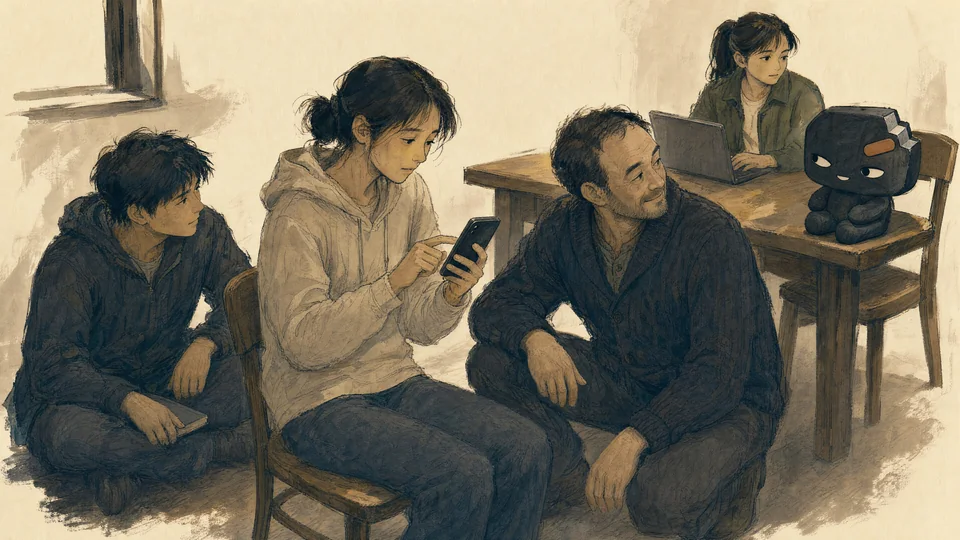
Kai asked whether he could install a garden of his own. Mira pushed towards him the instructions they had written yesterday.
He began at the end, got confused, went back to the beginning. He found a missing step.
Bal took out a pen.
On the square, the counter plunged. Someone shouted. Ren looked out of the window, then returned to the visitor who wanted to know whether there would be other creatures here.
“If Mira wants to draw them,” he said.
“I'm leaving tomorrow,” Mira said.
The visitor was disappointed without the slightest interest in her stake in the project. He asked whether he could show her his drawings.
She gave him an address.
The late guest never came. One of the four left early and did not write again. The others stayed, but Bal only stopped watching the clock when Kai asked them not to switch off the router: his download had not finished.
At the door, Kai turned back.
“That was an angry message.”
Bal knew which one he meant.
“I saw it.”
“I left something there too.”
He did not name an amount. Bal did not ask.
“I'll check it at home tomorrow,” Kai said, picking up his bag. “If it doesn't open, I'll write.”
Kai left, checking once more that the address had been saved on his phone.
A Light in Another Window
On Friday, Mira left, as she had said she would on the first day.
Kif helped carry her bag. Nil sent her the latest checked version and, separately, a list of what still did not work. Ren asked permission to leave her name beside the drawings. She said that was exactly why she had put it there.
Bal reached the car in time.
He had prepared words about open doors, the future, the possibility of returning. Mira spoke first.
“I'll leave the extension lead. It's heavy.”
“I'll give it back when you come.”
“Don't promise. You'll lose it yourself.”
She hugged him awkwardly, catching her shoulder on a hard edge. Bal tried too late to turn so she would be more comfortable.
The car left. A laundry van immediately took its place.
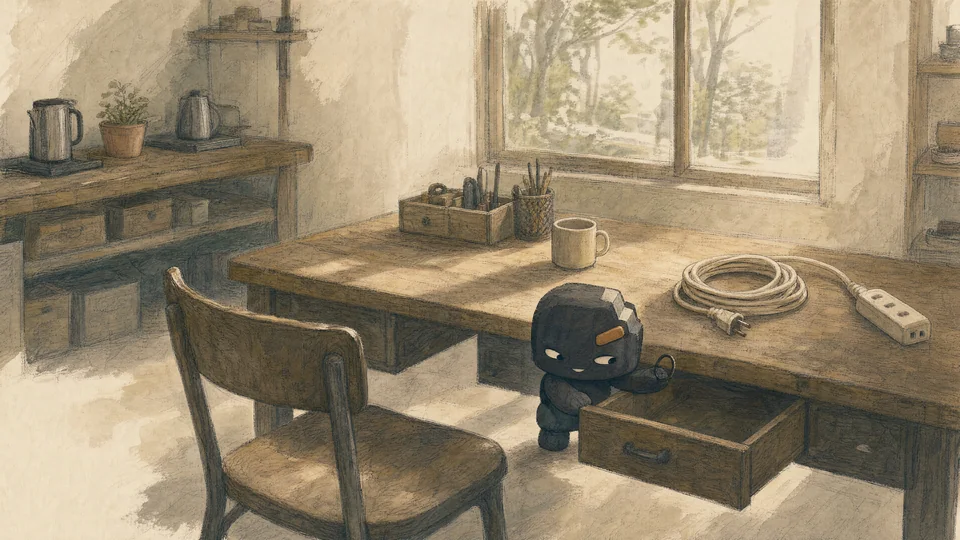
Bal went up to the workshop. A hair tie lay on Mira's table. He put it beside the extension lead, then changed his mind and put it in a drawer so it would not get lost.
Nil was working through a calculation. He was checking whether they could restore exchanges in a way that made the participants truly agree on one result, instead of each seeing a reassuring picture. Sever argued with him about what would happen during a long loss of connection. They found no simple answer.
Bal opened the old diagram from the mountain.
“Back then, it seemed enough to remove the one in charge.”
Nil looked.
“Enough for which task?”
Bal wanted to answer, “For freedom.” He remembered the two screens disagreeing about who owned the seed.
“For that one, it was enough. Not for this.”
Sever cleared some space. They laid the two diagrams side by side.
By noon, Kai had sent a recording. On his computer, the creature hid a seed beneath a purple tree. He closed the game. Opened it again. The seed remained.
“Without your link,” he wrote.
The purple did not suit Mira's drawings at all. Kai was delighted.
Kif covered his face with his hands.
Bal laughed.
The next message was serious. Kai planned to invite his friends and asked whether he could put “compatible with Bal's garden” on the page.
Kif read Kai's message twice.
“He's already inviting other people,” he said. “We need to understand what he's promising them. I'll ask.”
They had not yet tested compatibility between independent copies. Nil began drafting an explanation. Bal sat beside him.
It took twenty minutes to agree on the wording. They settled on: “Built from the shared open version. This is a separate garden. Exchanges are not yet available.”
Kai said it was too long, but kept it.
“Can I use Bal's name?” he asked next. “At least people will understand where it came from.”
Kif wrote: “You can say what it's built on. We haven't checked your version, though.”
Bal reread the answer. He wanted to add something welcoming. Kai had already sent a thumbs-up.
Then he sent another question. A friend of his wanted to grow his own plants and sell them in other gardens. So that when a buyer passed through someone else's door, the thing they had bought remained theirs.
Nil read the question aloud.
“There'll be real money here,” Ren said.
“And the buyer doesn't know any of us,” Sever added.
Bal took out a new sheet. This time, the first person he put on it was someone who had not yet arrived. Kai should not have to bring them into this room and introduce them to good people just to make one purchase.
Now it was not enough to save a seed on your own machine. If someone bought a plant and moved it to another garden, both gardens had to remember the same owner. On Wednesday, they had seen what happened when each screen showed its own truth.
Nil took a blank sheet. He drew two windows with a small rectangle between them.
“This is empty for now,” he said. “We haven't decided exactly what the contract will record.”
Bal pulled up a chair.
“Once, I'd have given it a name already.”
“Give it one. Just leave room for the rules.”
Ren laughed. Kif wrote the first question: what does the person buy—the drawing, the right to change it, or the ability to use it in someone else's game?
Another question followed: who could change the terms after the purchase? Sever asked what the person would have left if all of them stopped answering. Sol sent a voice message: he was worried that, once again, a good game was about to be made to explain a financial scheme before anyone was allowed to play it.
Bal played the message a second time.
“He's right. You can play without buying.”
“Then let's write that down too,” Kif said.
Nil outlined the empty space between the windows.
“Are we answering him now?” Ren asked.
“We have no answer yet,” Bal said.
“We do. He can't buy something here and take it there. He won't wait until morning just because we're still drawing.”
Kif sent the answer and put his phone at the edge of the crowded sheet. Nil turned the paper over: there was still no room for the rules.
Bal looked at the address of Kai's garden. There, people could change the rules, argue without him, invite people he would never see. He did not know what would grow out of it. He could not even remove the purple background.
Ren received an offer from Ors. Another showing, later, if the checks passed. This time, Bal did not answer first. He put the message on the shared table.
“Shall we discuss it after lunch?”
Nil looked at the clock.
“After two. I'm going out before that.”
“Where?” Bal asked, and immediately winced.
“I've got things to do.”
Nil said it calmly. He took his jacket and left the calculation open.
Bal did not promise to have everything solved by the time he returned.
That evening, they disagreed again. Ren wanted to show the work more often. Kif wanted to finish the controls first. Sever would not let them call something safe before they had worked through the dangerous cases. Bal proposed testing some of their ideas in a separate experiment with clear limits.
The argument grew loud. Someone in the laundry knocked on the ceiling.
They laughed, then continued more quietly.
Bal returned to the question from the person drawing plants. The man had neither bought nor sold anything yet, and they had already filled both sheets. On a third, Bal wrote: “What will he be able to check for himself, without asking us?”
He sent the question to Kai. The answer arrived after the laundry lights had gone out:
“If you make another mistake, will I be able to notice before I lose something?”
Bal left the message open.
A Place for the Living
On Saturday, Bal called Sol and suggested breakfast.
“Tomorrow works. Only in the morning,” his friend said. “I've got things to do afterwards.”
On Sunday, Bal arrived ten minutes early. He left his phone in his pocket. Two cups stood on the table; Sol had not touched his yet.
“You left the show early,” Bal said.
“You were managing.”
“I wanted to show you one more thing.”
Sol looked at his pocket.
“After breakfast.”
Bal took his hand away.
They talked about the game. Sol explained why you wanted to touch the creature even when nothing was happening, and why the first hint got in the way. Bal wrote two words on a napkin. At the third, Sol took away the pen.
“You won't forget.”
Then he told Bal what had been happening in his own life.
Bal knew the beginning but had missed several months. At one point, he congratulated his friend on something Sol had given up long ago.
“I told you,” Sol said.
Bal did not remember.
“Tell me again.”
Sol checked the time. He could still make his plans.
When the bill arrived, Bal said:
“You've pulled me out so many times. I don't know how to give that back.”
Sol folded the napkin with the two words about the game.
“Next time, come when we agreed.”
Bal nodded. No larger promise was needed.
Outside, Sol caught his sleeve. He looked at the red bandage.
“The edge is peeling.”
“It's holding.”
Sol smiled and let go.
At the workshop, Bal was alone. Nobody had promised to come on Sundays. He opened the window, washed the cups, and left them to dry with the handles pointing the same way. Only then did he notice what he had done.
The extension lead lay on Mira's table. Bal put it in the drawer with the hair tie. He immediately wanted to fill the empty space with another machine. He left it empty.
He found the restaurant sheet beneath the calculations. On one side, he could still read the idea prepared for an hour-long meeting. On the other, two kinds of handwriting crossed. The little hole left by the glass had grown: the paper had worn thin.
Bal put a clean sheet beneath it.
He remembered waiting for agreement that evening. How quickly he had tried to explain what he could do and how much he could contribute. Sever had spent a long time trying to dissuade him. Later, Bal tried to remember the moment he had stopped hearing those objections as a rejection of himself.
He could not.
But he remembered a hand crossing out its own arrow. “Yes. We can't do that.” And how easy it had been afterwards to pull his chair closer.
Someone knocked. Nil had come for the charger he had forgotten.
“I won't stay.”
He found it under the table, coiled the cable, and was about to leave when he noticed the open window with the creature.
“Is that Mira's copy?”
“Kai's. He sent it.”
They watched the creature hide a seed beneath a purple tree.
“Terrible colour,” Nil said.
“He likes it.”
Nil leaned towards the screen. The seed had been saved. He checked again, this time without leaning closer.
“Well, good.”
Bal wanted to ask about the new contract. Instead, he picked up the charger, which Nil had put down on the table again, and handed it to him.
“You'll forget.”
Nil laughed and left. This time, Bal did not detain him at the door.
Later, Kif wrote. He had spoken to the man who wanted to sell plants. It turned out he drew them with his daughter and had not yet decided whether he wanted to sell anything at all. He liked the possibility of putting his work in someone else's garden. He had asked about money because he had grown used to not being heard unless money was involved.
“I told him he could show us first. We're calling on Wednesday. Will you come?”
Bal wrote that he would. He opened the calendar and checked the time before pressing send.
Ren sent a short recording of his conversation with Ors: another slot might be possible, but they needed the check results first. Then came the answer Ren had promised after their conversation about faith in the courtyard. Ren noted separately which parts he had put in his own words and where he still wanted to clarify something.
Bal listened to both messages. He gave the second a longer answer.
By evening, Sever had sent back the sheet of questions. Bal opened his earlier reply. He had answered the convenient part in detail and passed over the rest with a promise to finish overnight.
He erased the promise and put an empty chair beside his own. Only then did he remember that today they were talking by video.
An incoming call appeared on the screen. Sever.
“I've looked at yours,” he said. “Let's start here.”
He showed the place he wanted to begin.
Bal felt relief before he could make out the small text on the screen. The look was familiar: Sever was already thinking about his question. Bal could be quiet for a second. The conversation would not disappear.
“I'll open it,” he said.
They did not work long. They put one task aside and found a check for another. At the end, Sever asked whether he had eaten. Bal said he had had breakfast with Sol, and heard how that sounded at eight in the evening.
“Understood,” he added.
After the call, he stood up. The glass reflected a stone forehead with a red strip. The edge really was peeling. Bal pressed it with his finger and waited. He remembered Sever holding that same corner while he had not known what to do with his hands.
The calculation was still open on the table. It held expenses, time for checks, several unknowns. Above it were Bal's earlier trades. Long ago, he had earned back the money he had once thought lost for ever. Judged by sums alone, this story could have ended long before the restaurant.
He closed the spreadsheet and finished listening to Ren's message.
He scrolled a month ahead in his calendar. Almost empty so far. He returned to Wednesday and set a reminder for an hour before the meeting.
Before leaving, he took down the diagram on which his name appeared five times. He rolled it up and put it in a tube. In the empty space, he pinned the sheet with two windows. Between them, Nil had left a rectangle for the contract.
Bal wrote beside it: “Who will be able to change the rules after someone has agreed to them?”
He stood for a moment. Added: “Including us.”
This garden was not yet feeding any of them.
He opened Kai's recording. The creature was hiding a seed under someone else's purple tree. On someone else's machine. After their workshop closed, it would still be there.
Beside it lay the sheet about a purchase between two gardens. Still unanswered. Exchanges did not work; no one had guaranteed another showing.
Beside the questions, he wrote the time of tomorrow's conversation.
Bal switched off the lamp but lingered at the door.
He thanked the Almighty for the people he had met. He named each one. He said Sever's name as he had never yet written it on these pages.
Then he stood in the dark for a little while. The phone had gone dark too; Bal put it in his pocket and felt for the key.
Downstairs, the phone vibrated briefly. A stranger had found Kai's garden and was asking whether they could add a drawing of their own.
Bal began to answer. Before he finished, a message from Mira appeared:
“Yes. Show me what you've got.”
He erased his unfinished reply. He left her message on the screen and walked out into the street.
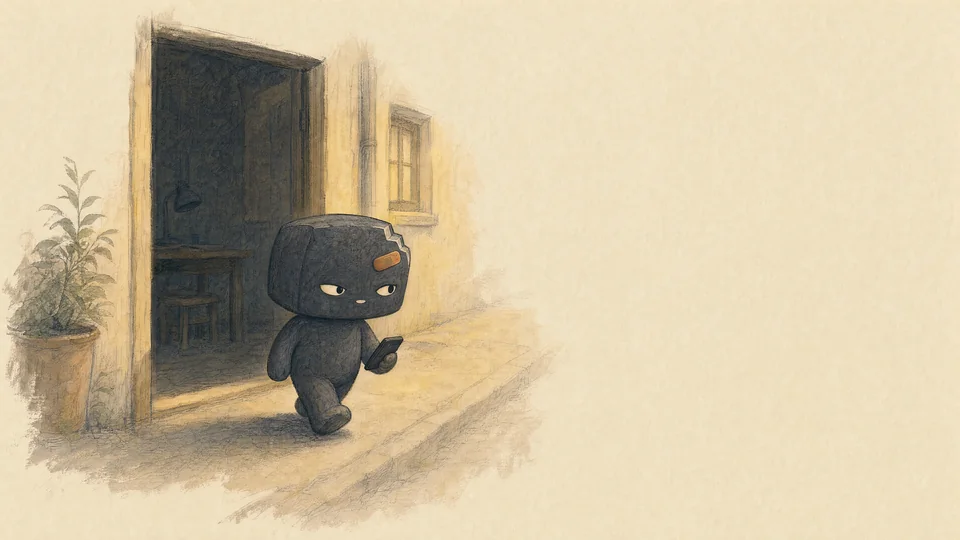
A van stopped outside the laundry. The driver asked him to move away from the gate, and Bal took a few steps towards the road. From there, he could see the dark rectangle of their window.
Another message arrived. From a different address.
“Someone gave me your link. I want to take my plant with me, but I can't find the button.”
Bal typed that people could not buy plants from them yet. Before sending it, he waited for the screenshot.
He did not recognise the garden's name. Beneath a tree stood a pot, with a price beside it and a payment confirmation. In small print at the bottom: “Based on Bal's garden.”
He opened the conversation with Kai. The thumbs-up was still there.
Bal typed: “This isn't our garden.”
He looked at the person's question. They had not asked whose garden it was.
Bal erased the answer and asked to see what they had been told before buying.
While the person searched, Bal went back to the gate and took out his key. He looked up at the dark window.
Then he put the key away, opened the group conversation and sent the screenshot.
“Does anyone know this garden?”